Introduction
Trezor.io/start is the official entry point for users who want to configure their Trezor hardware wallet in a safe and secure environment. Hardware wallets remain one of the most trusted solutions for storing cryptocurrencies because they keep private keys offline and isolated from potential online threats. With the increasing number of scams and cyberattacks targeting digital assets, self-custody tools such as Trezor help users maintain full control while drastically reducing risk. The Trezor brand, developed by SatoshiLabs, has played a major role in shaping modern hardware wallet security, offering a combination of simplicity, transparency, and robust cryptography. This guide explores how the setup process works, why Trezor devices are considered secure, and how users can manage their funds with confidence.
By understanding the onboarding steps and adopting proper security habits, users can avoid common mistakes and strengthen the protection of their wallets. Whether you store a small amount of crypto or manage a large portfolio, Trezor provides a dependable foundation for safe storage and long-term asset management.
Key Security Features of Trezor Devices
The most important advantage of a Trezor wallet is its ability to keep private keys completely offline. The device uses a dedicated secure microcontroller that stores keys in an isolated environment, making extraction extremely difficult even if the connected computer is compromised. All signing operations take place internally, and the user must manually confirm each transaction on the device screen. This dual verification process prevents unauthorized transfers and ensures the user always knows exactly what is being signed.
Another strength of Trezor lies in its transparent, open-source architecture. Because the firmware and software can be inspected by the community, any vulnerabilities are more likely to be found and fixed quickly. This openness has earned Trezor a reputation for reliability and integrity, setting it apart from many closed-source competing solutions.
Before You Begin: Verifying Your Device
Before starting the setup, users should carefully check the packaging. A genuine Trezor device comes sealed, and any sign of tampering or damage should raise concerns. Hardware wallets rely on a secure supply chain, so if the device appears altered in any way, it should not be used. Instead, contact the vendor or manufacturer for assistance.
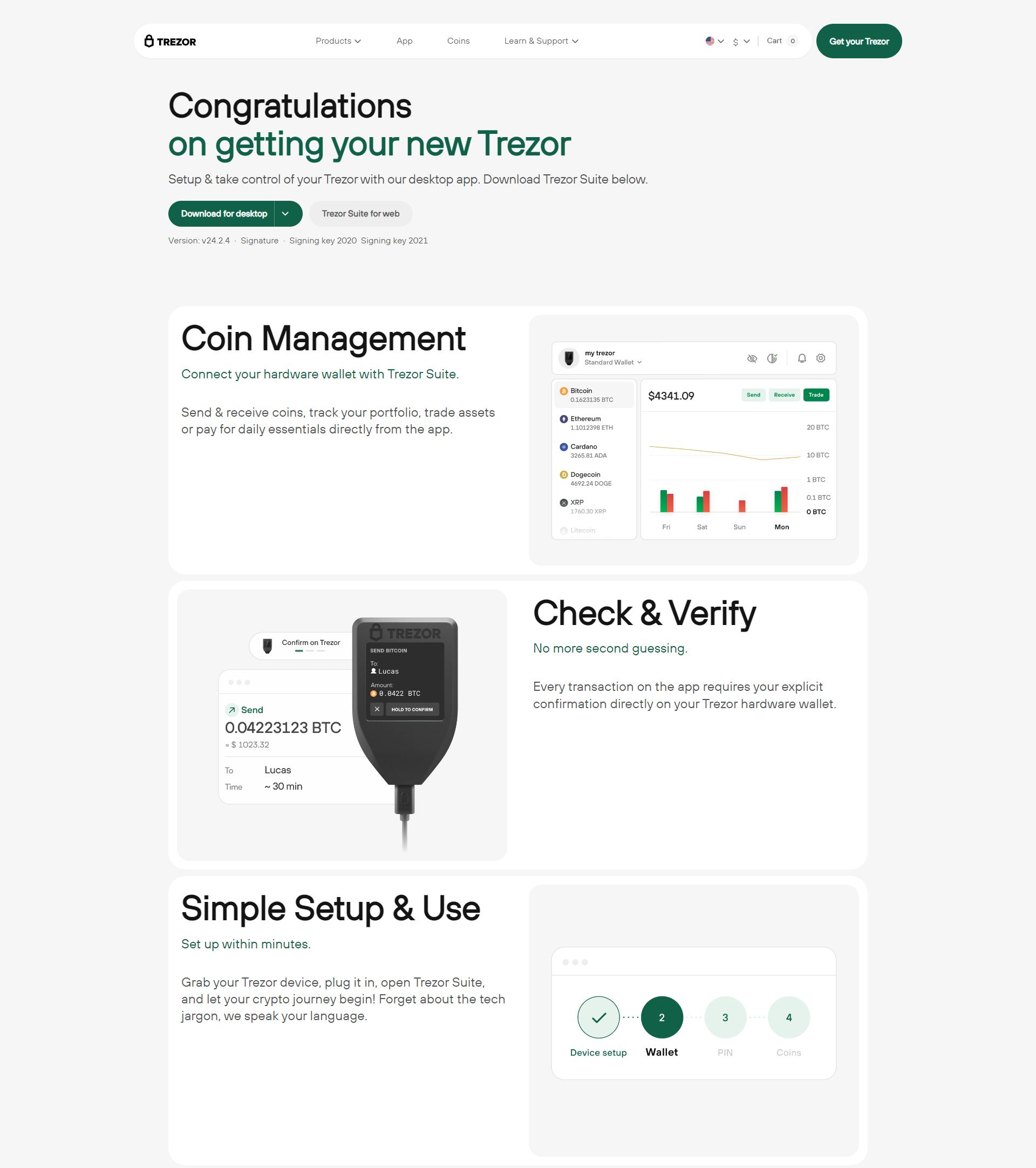
Once you are confident the device is authentic, navigate to the official setup portal and download Trezor Suite. The application will guide you step by step through the initialization process, firmware installation, and account creation. Trezor Suite is designed for both beginners and advanced users, offering a clean interface and powerful features.
Initializing Your Trezor Wallet
During the initialization process, the device asks you to create a PIN. This PIN protects access to the wallet and prevents unauthorized users from interacting with the device if it is lost or stolen. After setting the PIN, the Trezor generates a recovery seed—typically 12 or 24 words—which serves as the backup for your wallet.
The recovery seed is extremely important because it is the only way to restore your funds on a new device. For this reason, it must be written down carefully and stored offline. Many users opt for metal backup plates, which offer durability against fire, water, and physical damage. Digital storage methods such as screenshots or cloud backups should never be used because they expose the seed to online risks.
Using Trezor Suite to Manage Your Assets
Once the wallet is set up, Trezor Suite becomes your control panel for managing cryptocurrencies. You can add accounts, check balances, send or receive transactions, and monitor activity. The software supports a wide variety of coins and tokens, and new assets are periodically added as the ecosystem evolves.
Even though the software handles the interface, the private keys remain locked inside the hardware. Each transaction must be confirmed on the physical device, ensuring that nothing is signed without explicit approval. This design protects users even if their computer contains malware or is otherwise compromised.
Security Best Practices
Having a secure device is only part of the equation—responsible behavior is equally important. Users should never share the recovery seed, never type it into websites, and always double-check URLs before downloading software. Phishing pages often imitate official portals, so caution is necessary. Keeping firmware updated also helps, as updates frequently introduce improvements and fixes for newly discovered vulnerabilities.
Conclusion
Trezor hardware wallets offer a reliable, transparent, and secure way to store digital assets. By keeping keys offline, requiring physical confirmation for every transaction, and embracing open-source development, Trezor provides a high level of assurance in an increasingly risky digital environment. Proper setup, careful handling of the recovery seed, and disciplined security habits can significantly reduce the likelihood of asset loss. As cryptocurrencies continue to grow in importance, tools like Trezor remain essential for anyone seeking safe and independent control over their funds.